Getting little ones to brush their teeth can sometimes feel like a full-time parenting job! Between wiggling, protesting, and insisting they can do everything themselves, establishing a consistent oral hygiene routine isn’t always easy. However, helping your child develop good brushing habits early can protect their smile and set them up for a lifetime of healthier teeth. Here’s what parents should know about brushing children’s teeth at every stage.
When Should You Start Brushing Your Child’s Teeth?
Believe it or not, oral hygiene should begin before your baby’s first tooth appears! You can gently wipe their gums with a clean, damp washcloth or soft gauze to remove bacteria and leftover milk or food particles.
Once that first tooth emerges, usually around six months of age, it’s time to introduce a soft-bristled, child-sized toothbrush. Baby teeth are susceptible to cavities, so establishing a brushing routine early is important.
You should also schedule your child’s first dental appointment when their first tooth appears or by their first birthday, whichever comes first.
Choosing the Right Toothbrush and Toothpaste
Not all toothbrushes are designed for little mouths! Look for a child-sized toothbrush with a small head and soft bristles. This makes it easier to reach every surface without irritating your child’s gums.
Electric toothbrushes can also be an option if your child prefers one, but a manual toothbrush works just as well when used correctly.
Fluoride toothpaste is important for strengthening enamel and helping prevent cavities. However, the amount you use should depend on your child’s age:
- Under age 3: Use a tiny smear of fluoride toothpaste about the size of a grain of rice.
- Ages 3 to 6: Use a pea-sized amount of fluoride toothpaste.
For children younger than 2, ask your dentist or pediatrician about fluoride toothpaste recommendations. Always supervise brushing to help prevent swallowing excessive toothpaste.
How to Brush Your Child’s Teeth Properly
Ideally, children should brush twice a day for two minutes, once in the morning and again before bedtime.
Use gentle, circular motions to clean the front, back, and chewing surfaces of every tooth. Pay special attention to the back molars, where food particles and plaque can accumulate.
Once your child has enough teeth for them to touch, you should also begin flossing between them daily. Flossing helps remove plaque and food debris that a toothbrush can’t reach.
After brushing, encourage your child to spit out excess toothpaste rather than rinsing with water. This allows some fluoride to remain on their teeth.
When Can Children Brush Their Teeth Independently?
It’s exciting when your little one wants to take responsibility for their own oral hygiene! However, young children often don’t have the coordination or attention span to brush thoroughly.
Most children need help or supervision until around age 7 or 8, sometimes longer. Letting them practice brushing independently is great, but be sure to follow up and clean any areas they missed.
Making Brushing More Fun
If your child treats brushing like a chore, try turning it into a game! Play their favorite two-minute song, use a fun brushing timer, or let them choose their own toothbrush and toothpaste flavor.
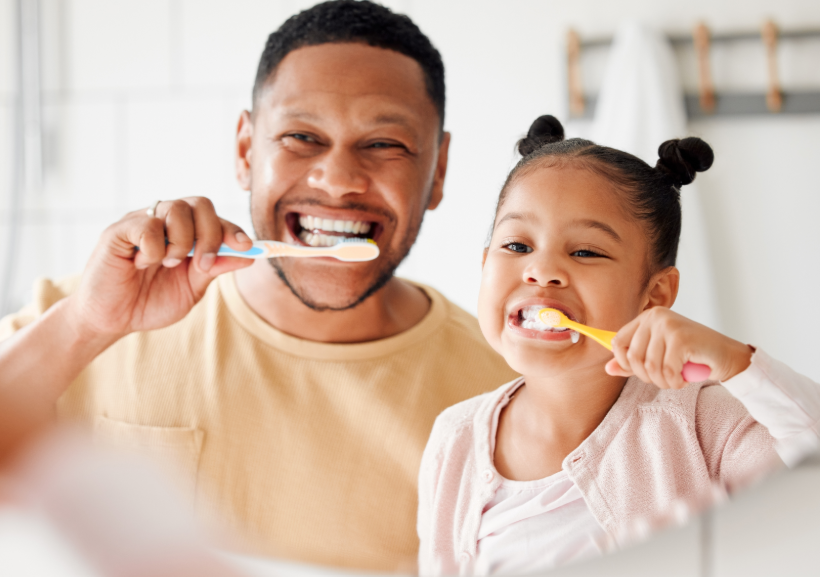
You can also brush your teeth together. Children often enjoy copying their parents, and modeling good habits reinforces the importance of daily oral hygiene.
With patience, encouragement, and a consistent routine, you can help your child build healthy habits that last well beyond childhood!
About the Practice
LMK Pediatric Dental Care provides specialized dental care for infants, children, and teens in Crown Point and Dyer, IN. Led by Dr. Lynn M. Karr, DDS, the practice emphasizes creating positive, comfortable dental experiences while helping children develop healthy habits. Dr. Karr has more than 25 years of experience and completed her pediatric dentistry specialist certification at the University of Illinois at Chicago. She is passionate about educating children on oral hygiene, nutrition, and the connection between oral and overall health.
Call us at (219) 488-2410 or schedule your appointment online